
Perth summers can sit above 35°C for days at a time, and the dry heat that rolls in off the desert makes cooling a home a genuine priority. Evaporative cooling Perth systems have been a popular answer to this for decades, largely because they’re built for exactly this kind of climate: hot and dry. Many homes then pair the system with ducted heating and cooling in Perth as a combined setup, using a separate system for winter warmth. This guide explains how the technology works, what it costs to run, when it’s the right choice, and when a different system might suit your home better.
Quick answer: Evaporative cooling Perth systems are a low-cost, effective way to cool most Perth homes thanks to the dry summer climate, and they’re commonly paired with ducted heating and cooling in Perth for year-round comfort. If you already run a gas heater, keeping it serviced through gas heater repairs Perth technicians provide each year helps avoid a mid-winter breakdown.
What Is Evaporative Cooling?.
Unlike refrigerated air conditioning, there’s no compressor and no refrigerant gas involved. The cooling effect comes from water evaporating, the same principle that makes you feel cold stepping out of a pool on a windy day. It’s a simple, mechanical process, which is part of why evaporative systems are cheaper to buy, install and run than ducted reverse cycle air conditioning.
How Does Evaporative Cooling Work?
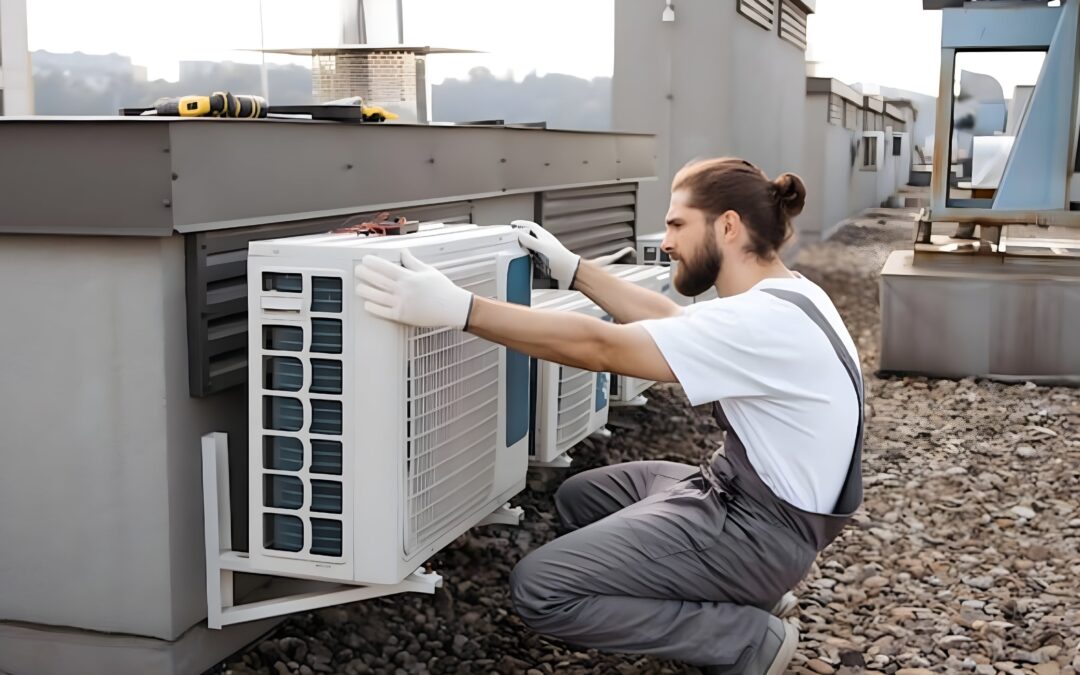
A roof-mounted unit draws hot air from outside through cellulose or paper cooling pads kept wet by a small water pump. As the air passes through the damp pads, some of the water evaporates, absorbing heat from the air. The cooled air is then pushed by an internal fan through ductwork into the ceiling space and out through vents in each room.
Because the system relies on a continuous flow of fresh air, evaporative cooling only works properly with a window or door left open in each room being cooled, letting air move through and out of the house rather than building up pressure. It’s a different way of living with cooling compared to a sealed-up refrigerated system, and it’s worth understanding before you commit to one.
Evaporative Cooling Perth: Key Benefits
The genuine advantages of evaporative cooling Perth homeowners should weigh up are:
- Lower running costs: With no compressor, an evaporative system uses substantially less electricity than a conventional refrigerated ducted system.
- Continuous fresh air: The system constantly draws in outside air rather than recirculating indoor air, which many people find noticeably fresher and helpful for allergies.
- Lower upfront cost: Evaporative units and installation are generally less expensive than an equivalent ducted reverse-cycle system.
- Whole-home coverage: Ducted evaporative systems cool every connected room at once, unlike single-room split systems.
- No sealed-house requirement: You can leave windows and doors open, which suits households that don’t like a closed-up home.
Important Things to Consider Before Installing Evaporative Cooling
Humidity Reduces Performance
Evaporative cooling is less effective as humidity rises. On Perth’s more humid days, usually a handful each summer, the temperature drop will be smaller than usual. This is a genuine limitation, not a fault.
Correct System Sizing Matters
An undersized unit will struggle to cool a home, while an oversized one wastes money. As a general guide, the system should change over the full volume of air in the cooled space roughly every two to three minutes, which requires an assessment of your home’s floor area and layout rather than a generic size chart.
Ceiling Space and Ductwork
Ducted evaporative systems need adequate ceiling space to run ductwork to each room. Older Perth homes with low or complicated roof cavities may need extra planning.
Water Use and Winter Air Leakage
Evaporative units use mains water to keep the cooling pads wet, so there’s an ongoing water cost alongside the electricity savings. The roof-mounted unit can also be a source of heat loss in winter if outlets aren’t sealed, so fitting outlet covers for the cooler months is worth doing.
Evaporative Cooling vs Ducted Reverse Cycle Air Conditioning
The two systems suit different priorities, and it helps to weigh them against each other directly rather than in isolation. Evaporative cooling is best suited to Perth’s typical hot, dry summer days, while ducted reverse cycle handles any weather, including the occasional humid stretch. Evaporative cooling only cools, so a separate heating system is needed for winter, whereas ducted reverse cycle heats and cools from one unit. On running costs, evaporative systems come out ahead because there’s no compressor, and the upfront purchase and installation cost is generally lower too.
The trade-off is lifestyle: evaporative cooling needs windows or doors left open to work, drawing in constant fresh outside air, while a ducted reverse cycle keeps the house sealed and recirculates conditioned air. On Perth’s more humid days, reverse cycle performance stays consistent, while evaporative cooling’s effectiveness drops.
Neither system is universally better. Evaporative cooling tends to suit homeowners chasing lower running costs and fresh airflow, while ducted reverse cycle suits homes wanting one system that also handles Perth’s cooler winter nights and the occasional humid stretch. Some homeowners solve this by combining evaporative cooling with a separate ducted gas heater instead, which is the more traditional form of ducted heating and cooling in Perth and is often the more affordable path overall.
Common Mistakes to Avoid
- Buying based on price alone: The cheapest unit may be undersized for your home, leading to disappointing performance in peak heat.
- Running the system with the house sealed up: Without airflow through open windows or doors, an evaporative system can’t cool effectively.
- Skipping seasonal servicing: A neglected system loses cooling capacity gradually, so many homeowners don’t notice until a heatwave exposes it.
- Ignoring humid-day settings: Running the water pump on a humid day adds moisture without much cooling benefit. Fan-only mode is usually the better option.
- DIY installation without proper duct design: Poorly planned ducting can starve some rooms of airflow while over-supplying others.
Maintenance and Professional Servicing
Evaporative systems benefit from a check before each cooling season. A typical service includes inspecting and, where needed, replacing the cooling pads, checking the water pump and float valve, clearing any mineral build-up from Perth’s water, and confirming the fan motor and belts are running properly. Regular maintenance protects the system’s cooling performance and its working life, and it’s far cheaper than a mid-summer breakdown repair. If your home also runs a gas heater in winter, it’s worth booking gas heater repairs with Perth technicians to carry out at the same time each year, so both your cooling and heating systems are checked before the season that needs them.
Pairing Evaporative Cooling with Ducted Heating in Perth
Because evaporative cooling only cools, many Perth homes pair it with a separate ducted gas heating system to cover winter. This combination, often described as ducted heating and cooling in Perth, gives you a dedicated, efficient system for each season rather than compromising with a single unit built for both. It’s a common setup in established Perth suburbs where the home already has ducted gas heating installed and evaporative cooling is added for summer, or vice versa.
Ducted gas heating works on a similar principle to evaporative cooling in terms of distribution: a central gas-fired unit heats air, which is then pushed through the same style of ceiling ductwork into each room. Because both systems can share ducting in some homes, planning them together at installation, rather than as two unrelated projects, often gives better airflow results and can reduce overall installation cost.
Keeping Your Gas Heating System Safe and Reliable
If you already run a ducted or portable gas heater, it needs its own seasonal attention, separate from your cooling system. Gas heater repairs Perth technicians commonly carry out include fixing pilot light and ignition faults, clearing blocked burners, replacing worn thermocouples, resolving faulty blower motors, and addressing yellow or sooty flames, which can signal incomplete combustion and a carbon monoxide risk. A cracked heat exchanger is a more serious fault that allows combustion gases to mix with the heated air being circulated through the home, and it’s one of the main reasons an annual inspection matters..
Any gas heating appliance, ducted or portable, should be inspected by a licensed gas fitter before each winter. This protects your family’s safety and catches small faults before they turn into costly repairs or a mid-winter breakdown.
Quick answer: Gas heater repairs Perth homeowners most often need involve pilot light faults, blocked burners, worn thermocouples and yellow-flame combustion issues. A licensed technician should inspect any gas heater annually to catch these faults early and confirm the system is safe to run.
Is Evaporative Cooling Right for Your Home?
Evaporative cooling is a strong option for most Perth homes, particularly larger properties where running costs matter, but it’s worth thinking it through against a few practical points first.
It’s likely to be a good fit if you:
- Want lower running costs than refrigerated ducted air conditioning
- Don’t mind keeping windows or doors open while the system runs
- Live in a typically dry part of the Perth metro area
- Already have, or plan to add, a separate ducted gas heater as part of a wider ducted heating and cooling in Perth setup
It may be worth comparing against ducted reverse cycle if you:
- Want one system that heats and cools without switching setups
- Live somewhere that experiences more humid stretches
- Prefer to keep the home fully sealed and climate-controlled year-round
Conclusion
Evaporative cooling Perth systems remain one of the most cost-effective ways to cool a home in this climate, largely because Perth’s hot, dry summers play to the technology’s strengths. It won’t suit every household, particularly if you want one system for both heating and cooling or you’re not keen on keeping windows open, but for many Perth homes it offers genuine savings without sacrificing comfort. Wanneroo Gas & Air Centre has been cooling and heating Perth homes since 1972, and we handle the full process from initial advice through to installation, servicing and repairs, for evaporative cooling, ducted reverse cycle, split systems and gas heating alike. If you’re weighing up evaporative cooling against other options, or your existing system or gas heater needs a service, our team can talk through what will actually suit your home, not just what’s cheapest to install.
Frequently Asked Questions
Is evaporative cooling any good in Perth?
Yes. Perth’s hot, dry summer climate is close to ideal for evaporative cooling, since the technology performs best when humidity is low. It becomes less effective only on the handful of more humid days each year.
How much does evaporative cooling cost to run compared to a reverse cycle?
Evaporative systems typically cost less to run than ducted reverse-cycle air conditioning because they don’t use a compressor, which is the main electricity draw in a refrigerated system. Exact running costs depend on the size of the unit, how often it’s used, and your home’s layout.
Do I need to leave windows open with evaporative cooling?
Yes. Evaporative systems need a window or door open in each room being cooled so air can flow through and out of the house. Without this airflow, the system can’t cool effectively.
How often should an evaporative cooling system be serviced?
Most manufacturers and technicians recommend a service before each cooling season, generally once a year in spring. This covers the pads, pump, filters, and motor.
Why has my gas heater started producing a yellow flame?
A yellow or sooty flame instead of a clean blue one can indicate incomplete combustion, which may point to a ventilation issue or a component fault. This is a safety concern, and the heater should be checked by a licensed technician before further use.