
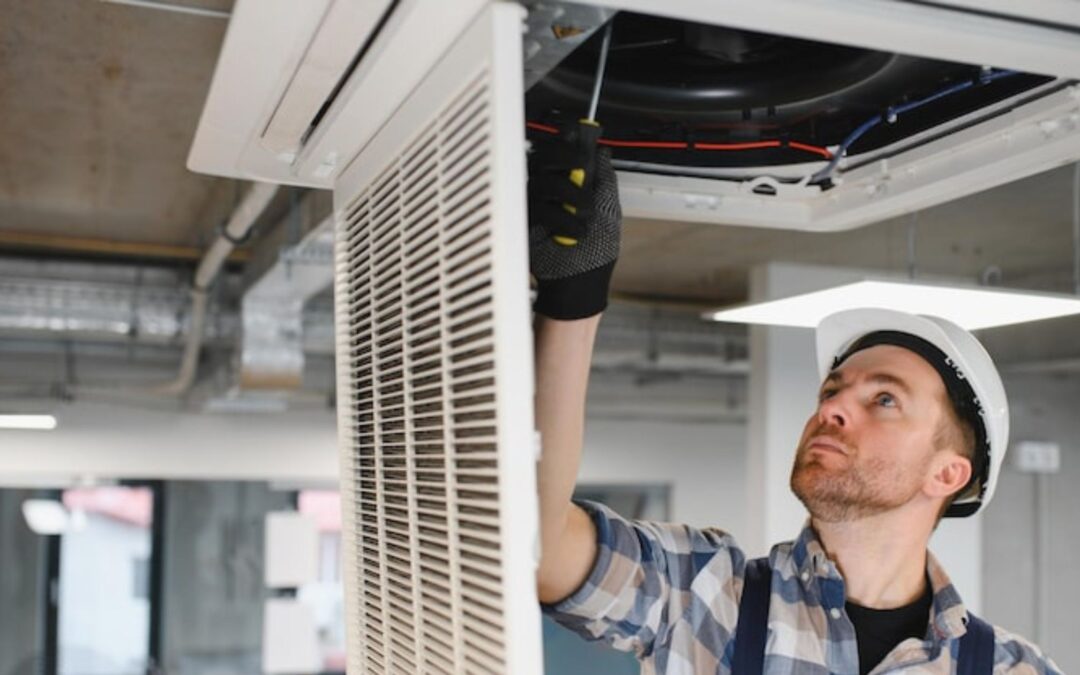
If you’re comparing cooling and heating options for your Perth home, you’ve probably landed on ducted reverse cycle air conditioning as one of the front-runners. It’s the system most installers recommend for whole-home comfort, but it isn’t automatically the right choice for every property. This guide explains what ducted reverse cycle air conditioning actually is, how it performs in Perth’s climate, what it costs to run and maintain, and how it compares to evaporative cooling, so you can work out whether it suits your home before you start collecting quotes.
What Is Ducted Reverse Cycle Air Conditioning?
Unlike a split-system air conditioning unit, which conditions one room at a time from a wall-mounted unit, ducted air conditioning is designed to serve the whole house from one central system. The indoor unit sits out of sight in the ceiling cavity, and conditioned air travels through insulated ducts to vents in each room. Because there’s no visible indoor unit in the living areas, it’s generally considered the least intrusive option for homeowners who want consistent comfort without wall-mounted boxes in every room.
The reverse cycle part means the system isn’t just an air conditioner; it’s also a heater. The same equipment that cools your home in summer can run in reverse to warm it in winter, so you don’t need a separate heating system for most of the year.
How Does Ducted Reverse Cycle Air Conditioning Work?
Refrigerant circulates continuously between an indoor coil and an outdoor coil. In cooling mode, the indoor coil absorbs heat from the air in your home, and the outdoor unit releases that heat outside, while a fan pushes the now-cooled air through the ducts to vents in each connected room. Warm air is then drawn back through a return air vent, and the cycle repeats. In heating mode, the process simply reverses, so heat is drawn from the outside air and released indoors instead. Because the system moves heat rather than creating it from scratch, as an electric or gas heater does, it’s generally an efficient way to heat a home, especially compared with older resistance-based electric heaters.
How It Handles Perth’s Climate
Perth has hot, dry summers with regular days above 35°C and mild, sometimes damp winters. Reverse cycle systems are well suited to this pattern because they perform consistently regardless of humidity, unlike evaporative cooling, which loses effectiveness as humidity rises. That makes ducted reverse cycle a reliable choice for the occasional humid summer day, and for the cooler, wetter months when a home also needs heating rather than just cooling.
Main Benefits of Ducted Reverse Cycle Air Conditioning
- Heating and cooling from one system: You don’t need a separate gas or electric heater for winter.
- Consistent comfort throughout the home: Every connected room can be brought to a similar temperature, rather than relying on individual units.
- Zoning control: Most systems let you switch zones on or off independently, so you’re not cooling or heating empty rooms.
- Discreet appearance and quiet operation: With only ceiling vents visible and the compressor located outside or in the roof space, there’s no wall unit taking up space, and indoor noise is generally lower than a split system.
Ducted Reverse Cycle vs Evaporative Air Conditioning
Quick answer: Ducted reverse cycle heats and cools with consistent performance in any weather, while evaporative cooling is cheaper to install and run but cools only and works best in Perth’s drier conditions.
Both systems are common in Perth, and each suits a different type of home and budget, so it’s worth understanding the genuine trade-offs rather than assuming one is simply better than the other. Ducted reverse cycle is the more complete solution if you want a single system that heats and cools your whole home reliably, regardless of how humid or cold the weather gets, because it performs consistently in any condition and gives you both seasons from one investment. Evaporative air conditioning Perth systems, on the other hand, are generally cheaper to install and run, and they work especially well in Perth’s dry climate, but they cool only; they need windows or doors left slightly open for airflow; they use water rather than refrigerant; and their performance drops off as humidity rises. If your priority is a lower-cost way to cool the house through summer and you’re happy to rely on a separate heater in winter, evaporative cooling is a genuine and cost-effective alternative worth considering. If you want one system that handles heating and cooling year-round without a second appliance, ducted reverse cycle is the stronger long-term option.
Important Things to Consider Before Installing Ducted Air Conditioning
Is Your Home Suited to Ducted Reverse Cycle?
Short answer: Ducted reverse cycle suits most Perth homes, but roof space, ceiling access, and home layout all affect how straightforward and how costly the installation will be.
- Roof space and layout: The indoor unit and ductwork need enough clearance in the ceiling cavity. Older homes with low-pitched roofs or limited access can still be fitted, but may need a more tailored duct design, and double-storey homes sometimes need two systems or careful duct planning to condition both levels evenly.
- Insulation: Ducted systems work harder and cost more to run in a poorly insulated home. If your ceiling insulation is old or thin, it’s worth addressing before or alongside installation.
- Existing ductwork: If you’re replacing an old ducted evaporative or reverse cycle system, an installer may be able to reuse existing ducts and vents, which can reduce cost.
System Sizing and Zoning
Getting the system size right matters more than most homeowners expect. An undersized system will struggle on Perth’s hottest days and run constantly, while an oversized system can cycle on and off too quickly, which wastes energy and doesn’t dehumidify effectively. Sizing should be based on your home’s floor area, ceiling height, insulation, window orientation, and the number of zones, not a generic rule of thumb applied without inspecting the property. Zoning lets you divide the home into separate areas, such as bedrooms and living areas, that can be run independently, and this is worth discussing at the design stage rather than after installation, since retrofitting zoning can be more expensive than building it in from the start.
Common Mistakes Perth Homeowners Make
Quick answer: The most common mistakes are choosing a system size on price alone, skipping zoning to save money, and overlooking insulation or duct design.
- Choosing a system size based on price alone, rather than a proper load calculation for the home.
- Skipping zoning to save money upfront, then finding it more costly to add later.
- Ignoring insulation and duct design, A well-sized system in a poorly insulated home, or one connected to poorly routed ductwork, will still run inefficiently and lose conditioned air before it reaches the room.
Maintenance and Servicing
A typical service includes checking refrigerant levels, cleaning or checking filters and coils, inspecting electrical connections, and confirming the system is running efficiently. Between services, cleaning or replacing filters every few months, more often if you have pets or live near dusty areas, helps maintain airflow and air quality. Left unmaintained, a ducted system can lose efficiency gradually, which often shows up as higher power bills before it shows up as an obvious fault.
What About Existing Gas Heating?
Quick answer: If your home still uses gas heating, it’s often worth getting it checked or repaired first rather than replacing it straight away, especially if you’re only starting to consider a ducted reverse cycle upgrade.
Some Perth homes still rely on ducted gas heating Perth or a portable gas heater rather than reverse cycle air conditioning, particularly older properties. If you’re weighing up whether to replace gas heating with a reverse cycle system, it’s worth having your existing gas heater checked first, since a straightforward repair may extend its life for several more winters and give you time to plan a ducted reverse cycle upgrade rather than rushing the decision. Gas heater repairs in Perth are also a safety consideration, since a poorly maintained gas heater can develop faults that aren’t obvious without an inspection.
Is Ducted Reverse Cycle Air Conditioning Right for Your Home?
Quick answer: It’s the right fit if you want one system for year-round heating and cooling with zoning flexibility, and less suited if your main priority is the lowest possible upfront or running cost.
Ducted reverse cycle air conditioning tends to make the most sense if you want one system for both heating and cooling rather than separate equipment for each season, consistent comfort across the whole home with the flexibility of zoning, and a discreet system with no wall-mounted units in your living areas. It’s worth thinking twice, or at least comparing options carefully, if your main priority is the lowest possible running cost for summer cooling only, your home has genuinely limited roof access, or your budget is tightly focused on installation cost rather than long-term running costs. In these cases, evaporative cooling or a split system may be a better starting point. The most reliable way to know for certain is a proper on-site assessment, since factors like ceiling height, insulation, orientation, and roof access can’t be judged accurately from a general guide.
Conclusion
Ducted reverse cycle air conditioning is one of the most complete cooling and heating solutions available for a Perth home, offering whole-home comfort, zoning flexibility, and year-round performance from a single system. It isn’t the only option, and it isn’t automatically the cheapest, but for homeowners who want consistent temperature control in every season, it’s hard to match. If you’re weighing up ducted reverse cycle against evaporative cooling, or you’re not sure whether your home’s layout and roof space are suited to a ducted system, the team at Wanneroo Gas & Air Centre can assess your property and talk you through the options honestly, without pushing you toward the most expensive system by default. Get in touch today to arrange a personalised assessment for your home.
FAQs
Is ducted reverse cycle air conditioning worth it in Perth?
For homes that want reliable heating and cooling year-round from a single system, it’s generally a worthwhile investment. It costs more upfront than evaporative cooling, but it covers both seasons and performs consistently regardless of humidity, which evaporative systems can’t do.
How long does a ducted reverse cycle system last?
With regular servicing, a well-installed ducted reverse cycle system typically has a service life of around 15 to 20 years, though this varies with usage, maintenance, and system quality.
Does ducted reverse-cycle air conditioning use a lot of electricity?
It uses more electricity than evaporative cooling, but reverse cycle technology is efficient because it moves heat rather than generating it. Running costs depend heavily on zoning use, system sizing, insulation, and how often the system runs.
What’s the difference between ducted air conditioning and a split system?
A split system conditions one room at a time from an individual wall unit, while a ducted system conditions the whole home through a single set of ductwork and vents, usually with zoning to manage different areas independently.
How often should a ducted reverse cycle system be serviced?
At least once a year is the general recommendation, with filters checked and cleaned more regularly between professional services.